Information on the destinations
Bolivia
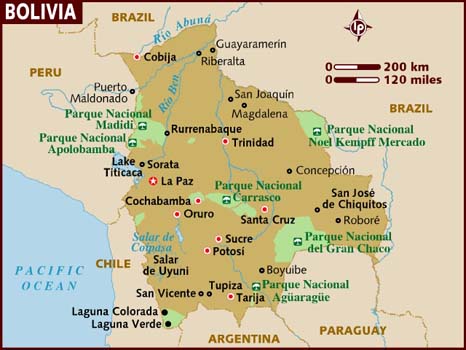
Bolivia, officially known as Plurinational State of Bolivia is located in South America. La Paz is the capital city of Bolivia. Although it is known as the poorest country in South America, it is richest in terms of natural resources. The Boliviano is the currency of Bolivia. It is divided into 100 centavos.
Bolivia is bordered by Brazil to the north and east, Paraguay and Argentina to the south, Chile by the south west and Peru to the west. It is South America's most indigenous country, with 60% of population claiming indigenous heritage.
History
What is known as Bolivia today has been occupied for 2000 years, when the Aymara people arrived, settling in Western Bolivia, Southern Peru and Northern Chile. Between 1438 and 1527, the Inca Empire embarked on a mass expansion and occupied was is known as Western Bolivia these days. However, the Inca empire could not maintain control over the region but nonetheless, it left a great mark on the history of Bolivia.
Western Bolivia was not the only area occupied by the Incas. Andean Ecuador, Peru, western Chile and northwestern Argentina made up an empire which stretched 2,000 miles in South America. The Incas enforced rules on those people.
The Incan Empire, before western contact, was thriving. Everyone received the items that they needed. The Incas had an imperial colonization policy to ensure the loyalty of people by moving conquered people and whole communities and resettling them in safe territories which were safe and loyal to the empire.
Culture
Bolivian culture has many Inca and Indian influences in music, religion and clothing. Entertainment includes: football, which is a national worldwide sport and zoos with a diverse population of creatures. Bolivia is also full of festivals and special dance celebrations.
People in Bolivia have great respect for family and traditions and likewise, tourists should also be respectful. Families are very tight knit in rural areas. Generations of the family may live together in one house. The roles within the family are very traditional.
The handshake is the most common form of greeting. Unlike Europeans, Bolivians use maternal and paternal surnames. The father's surname is listed first. If you know the title of the person, always use it.
Argentina
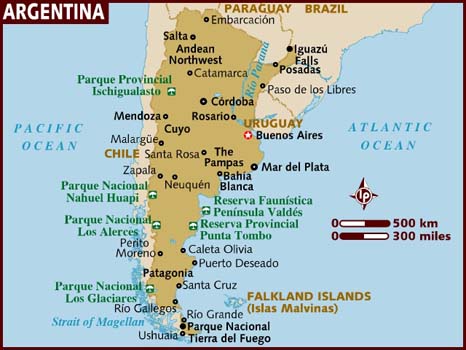
Argentina, officially known as the Argentine Republics, is the second largest country in South America. Buenos Aires is the capital city of Argentina. It is the second largest country in South America by land area, after Brazil. The Argentina Peso (ARS) is the currency of Argentina.
Argentina borders Paraguay and Bolivia to the north, Brazil and Uruguay to the northeast, and Chile to the west and south.
Before the arrival of Europeans at the beginning of the 16th century, Argentina was populated by about 100,000 people. Settlements in the north west were part of the Inca Empire. Nomadic Indians were spread out through different parts of the territory. In 1516, Juan Diaz de Solis became the first European to set foot on the Argentine soil. The colonizers brought with them the Spanish language, Catholicism and European traditions. On May 25th, 1810, the first independent government was established. From the 1820s, a period of intense domestic struggle took place to among the political groups, which lasted until the middle of the century.
Culture
The culture of Argentina varies throughout the whole region because of the mix of ethnic groups. The modern Argentine culture has be greatly influenced by the European immigration. Culturally and emotionally, Argentines are often seem more European than Latin American.
All over Argentina, fine handicrafts can be found. The gauchos produce silver buckled belts, spurs, stirrups and the mate gourds. The Indigenous people make wood carvings, weavings and textiles, such as ponchos. Tango is the dominant music and dance of Argentina, but other folkloric music persist too.
Initial greetings are formal and follow the order of greeting the elderly or the most important person first. In general, Argentines prefer third-party introductions, so you should wait for your host or hostess to introduce you. When leaving a place, say good bye to every person individually.
Chile
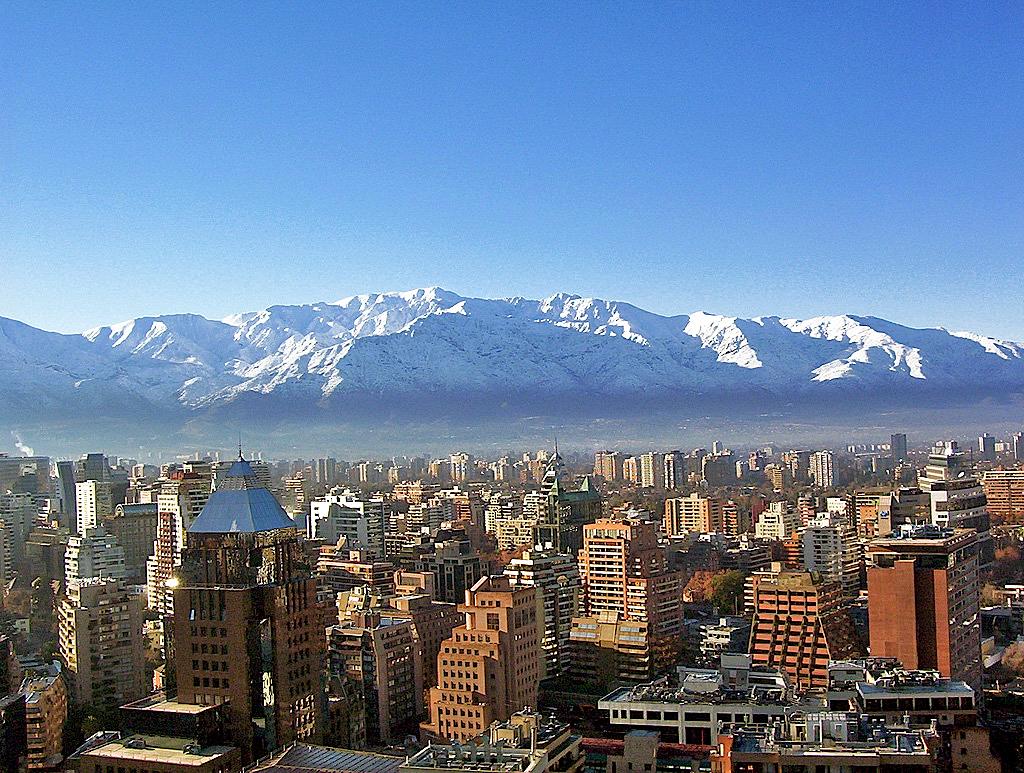
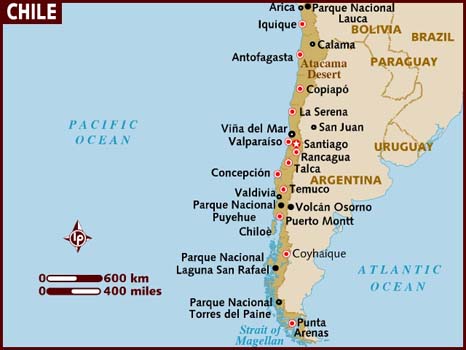
Chile, officially the Republic of Chile is a country in South America. It stretches over 4300km and over half the continent. The capital city of Chile is Santiago. Along with Ecuador, it is one of the two countries that do not border Brazil. Today, Chile is one of South America's most stable and prosperous countries. The northern desert contains great mineral wealth.
Chile borders Peru to the north, Bolivia to the northeast and Argentina to the east.
Chile was originally under the control of the Incas in the north and the nomadic Araucanos in the south. In 1541, a Spaniard, Pedro de Valdivia, founded Santiago. Chile won its independence from Spain in 1818 under Bernardo O'Higgins and an Argentinian, José de San Martin. O'Higgins, dictator until 1823, laid the foundations of the modern state with a two-party system and a centralized government.
In 1970, Salvador Allende became the first president in a non-Communist country freely elected on a Marxist program. Allende quickly established relations with Cuba and the People's Republic of China, introduced Marxist economic and social reforms, and nationalized many private companies, including U.S.-owned ones. In Sept. 1973, Allende was overthrown and killed in a military coup covertly sponsored by the CIA, ending a 46-year era of constitutional government in Chile.
The Chilean culture is more European style than Latin America, due to the European migrants in Chile. People that come in to Chile have been assimilated into the culture without prejudice and accepted the predominance of the Spanish language, and the strong influence of Roman Catholicism. The influence of Roman Catholic Church is felt -- making an abortion in the country is illegal.
Chileans expect limited use of gesture and hand movement.
Gestures likely to be misinterpreted are:
- making a fist and slapping it against the other hand
- turning the palm upward and spreading the fingers
- holding the hand as if holding a round object
- holding the fist upright, level with the head.